

Why Do Modern Buildings Install Fresh Air Fan Systems
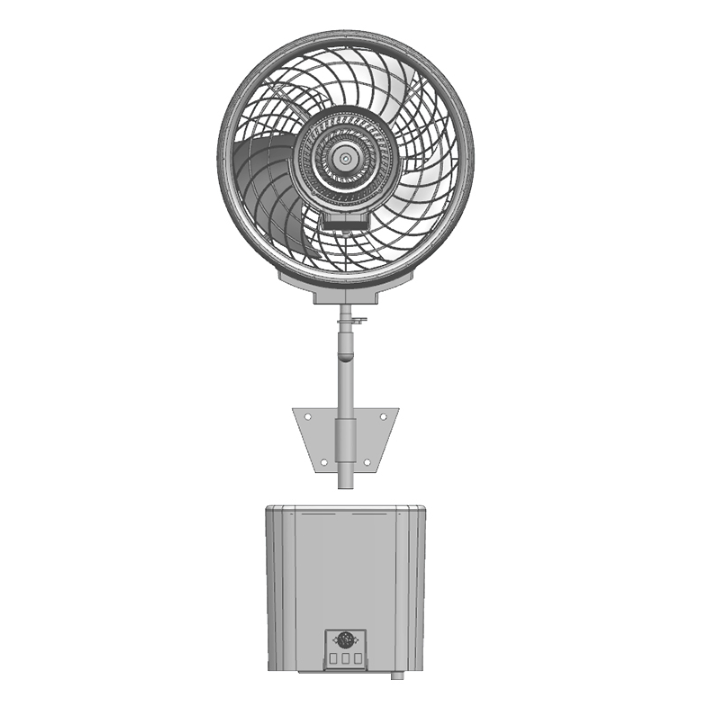
Air circulation plays an essential role in maintaining comfortable indoor environments. A Fresh Air Fan driven by an EC Fan motor often forms part of ventilation systems designed to introduce outdoor air into enclosed buildings while guiding indoor air outward. These systems are widely used in residential apartments, offices, and public facilities where consistent airflow supports daily activities and indoor comfort.
Many modern buildings focus heavily on energy efficiency. Improved insulation, sealed windows, and climate control equipment help regulate indoor temperatures throughout the year. While these design features improve temperature stability, they can also reduce natural airflow between indoor and outdoor environments. Mechanical ventilation systems provide a practical way to maintain air exchange under such conditions.
Fresh air fans typically draw air from outside the building through dedicated intake ducts. This air often passes through filtration components before entering indoor spaces. Filtration helps reduce dust or particles that may be present in outdoor air, allowing cleaner airflow to circulate inside the building.
EC fan motors play an important role in controlling this airflow. The term EC refers to electronically commutated motor technology, which combines electronic control circuits with brushless motor structures. This design allows the motor to operate at variable speeds rather than running at a fixed rotational rate.
Variable speed operation offers useful flexibility for ventilation systems. When fewer occupants are present in a building, the fan can run at a reduced speed to maintain basic airflow. During periods when more ventilation is needed, the motor can increase its speed and deliver greater air circulation.
Manufacturers such as Taizhou Jiucang Electromechanical Co., Ltd. produce ventilation equipment designed to support different building applications. Their products often combine EC fan technology with carefully engineered fan housings that allow stable airflow movement through ventilation ducts.
Fan blade design contributes significantly to airflow efficiency. Engineers examine airflow patterns around the rotating blades to ensure that air moves smoothly through the fan housing. Balanced blade geometry helps reduce turbulence, which may otherwise increase noise or vibration.
Noise management remains a common concern when ventilation systems operate inside living or working environments. Fresh air fans installed in residential buildings often run for long periods each day. Quiet motor operation and carefully designed airflow channels help reduce sound levels during continuous use.
Ventilation equipment also needs to adapt to various installation environments. Some buildings place fresh air fans within ceiling spaces, while others install them in mechanical rooms or rooftop ventilation units. Compact designs help installers integrate these systems without requiring major structural changes.
Office buildings often depend on centralized ventilation systems serving multiple rooms simultaneously. In these settings, fresh air fans help maintain airflow across meeting rooms, hallways, and workspaces where employees spend many hours each day.
Educational facilities also benefit from reliable ventilation systems. Classrooms frequently contain many students during lessons, and steady airflow helps maintain comfortable indoor conditions during extended periods of occupancy.
Healthcare facilities represent another environment where controlled ventilation supports daily operations. Although specialized air handling systems are often required in hospitals, fresh air fans still contribute to maintaining airflow in administrative areas or public spaces within medical buildings.
The development of smart building technology has influenced ventilation equipment as well. Environmental sensors installed throughout a building can measure temperature, humidity, or air quality indicators. These sensors may communicate with control systems that adjust EC fan speeds automatically.
This type of automated control allows ventilation systems to respond to real-time conditions rather than relying solely on manual adjustments. As a result, airflow remains consistent even when building occupancy changes throughout the day.
Manufacturers continue exploring improvements in motor efficiency and fan structure. Advances in electronic control circuits help EC fan motors maintain stable rotation across different operating speeds. Improved materials for fan housings also contribute to durable operation in various environments.
 Spanish
 English
 Arabic
 French
 Portuguese
 Deutsch
 Turkish
 Dutch
Dutch
 Italiano
 Russian
 Romaian
 Portuguese (Brazil)
 Greek
Greek