

Comparing Static Control Solutions for Industrial Polystyrene
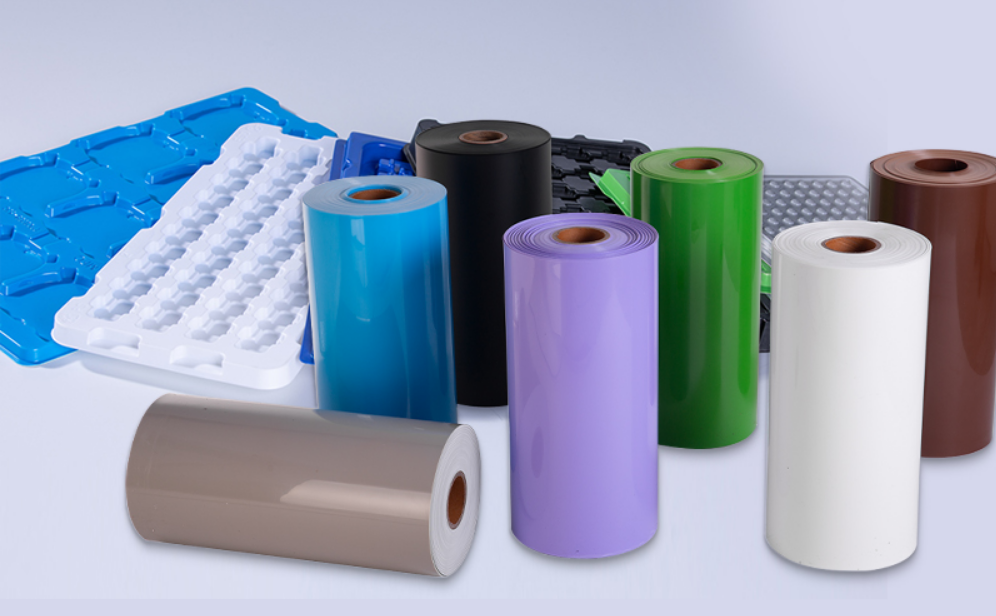
Selecting the correct static control solution for a project often depends on application-specific requirements. Engineers evaluating PS Black Conductive and Clear Antistatic PS materials need to consider properties like electrical performance, transparency, mechanical behavior, and long-term reliability.
For applications where static control is essential but visibility is not critical — such as internal packaging or structural trays — conductive formulations are frequently preferred. Conductive fillers are added to the PS matrix to lower the resistivity of the material to a level where static charges can dissipate efficiently. These formulations are particularly effective in environments where static buildup can interfere with assembly or handling workflows.
In contrast, there are scenarios where transparency and visual clarity are critical — for example, clear shielding covers or display windows. In these cases, Clear Antistatic PS materials provide a viable alternative by incorporating antistatic additives that do not significantly alter optical properties. However, users must carefully evaluate the formulation to ensure that antistatic functionality persists without sacrificing clarity.
Another important selection criterion is surface resistance requirements. Different industries have various thresholds for what they consider acceptable for static dissipation. For instance, sensitive electronic components often require materials with surface resistivity values within a specific range to ensure reliable ESD protection. Adjusting antistatic additive content or choosing conductive additives with the right aspect ratio and conductivity helps meet these parameters.
Manufacturability is another key aspect. Both conductive and antistatic PS products can usually be processed using conventional plastic processing equipment, but the specific formulation may influence melt flow, processing temperature, and die behavior. Users often inquire about whether standard injection or extrusion settings are suitable or if adjustments are necessary. Testing and experienced resin selection can streamline integration into existing production lines.
Finally, service life considerations — such as environmental exposure, humidity fluctuations, and cleaning cycles — can impact static control performance. Materials with non-migratory antistatic additives or inherently conductive networks offer more stable long-term performance in variable conditions.

 Arabic
 French
 Spanish
 Portuguese
 Deutsch
 Turkish
 Dutch
Dutch
 Italiano
 Russian
 Romaian
 Portuguese (Brazil)
 Greek
Greek