

How to Tune Your Distillation Process for Consistent Output
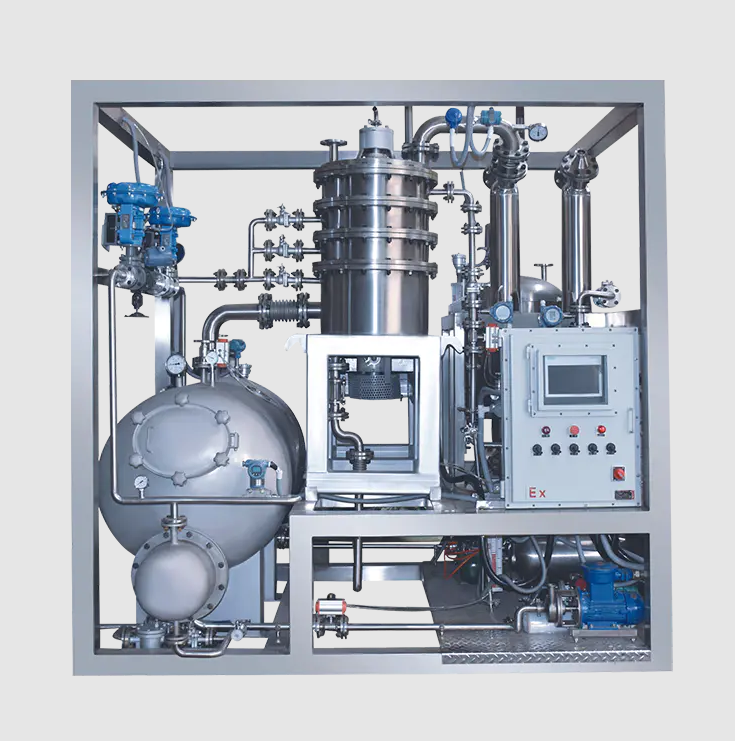
In the many threads on professional social platforms and engineering forums, one recurring theme is how to achieve consistent separation performance with a Distillation Unit. Users often start by asking basic questions about how to interpret temperature and pressure profiles across a column. Because distillation relies on differences in boiling points and repeated vapor-liquid equilibrium stages, even slight shifts in feed composition or heat input can change the overhead and bottom product compositions. A popular explanation from experienced practitioners involves paying close attention to the feed tray location and adjusting reflux ratios to maintain the desired separation profile.
One operational issue often discussed is “flooding,” where vapor and liquid traffic inside the tower becomes excessive, leading to degraded separation and increased pressure drop. Operators recommend reducing vapor flow rates or adjusting the boil-up rate to maintain stable trays or packing performance. Others talk about how to spot tray or packing malfunctions by examining temperature gradients at different heights of the column. These real-world troubleshooting steps are shared in community Q&A posts and are valuable for young engineers who are still learning distillation dynamics.
Users also ask about strategies for energy savings. Distillation can be a significant portion of plant energy consumption, so questions about heat integration, multiple effect operation, or adding steam-jet or mechanical vapor recompression are common. These techniques help reduce steam demand and overall energy footprint, albeit with more complex control requirements and equipment costs.
Another topic that emerges repeatedly is product quality control in distillation. Operators want to understand how to minimize impurities in distillate streams, avoid carry-over of high boilers, and achieve tighter cuts between fractions. Tips shared include careful control of reflux drum level and using analytical feedback from online analyzers to adjust setpoints. This reflects a broader desire in the process community to marry empirical plant experience with data-driven control strategies.
Finally, safety and maintenance are frequent discussion points. Distillation columns operate at high temperatures and sometimes under vacuum, so users often ask about managing corrosion, maintaining reliable seals, and scheduling turnaround maintenance to check trays, packing, and internals. These practical exchanges — whether they come from seasoned operators or curious newcomers — form a dynamic knowledge base that helps every facility enhance reliability and performance.
 Portuguese
 English
 Arabic
 French
 Spanish
 Deutsch
 Turkish
 Dutch
Dutch
 Italiano
 Russian
 Romaian
 Portuguese (Brazil)
 Greek
Greek